general
Rank Atlas: Country Ranking #77 2026
A granular, data-driven dissection of the higher education landscape in Country #77 for 2026. We scrutinise enrolment pipelines, graduate outcomes, funding efficiency, and institutional resilience to provide a decision-making framework for students, policymakers, and institutional strategists.
The 2026 Rank Atlas places the higher education system of Country #77 under a forensic lens. This analysis moves beyond prestige signals to examine structural integrity. With global cross-border student mobility projected to reach 8 million by 2025 according to UNESCO, the competitive pressure on mid-tier systems like Country #77 has never been more intense. Our assessment draws on the latest OECD Education at a Glance data and the QS World University Rankings 2026 cycle to map the precise contours of this landscape. We find a system grappling with a critical tension: improving gross tertiary enrolment ratios while maintaining fiscal sustainability and graduate employability.
The Macro-Educational Footprint: Enrolment and Demographics
Country #77’s tertiary education system serves a domestic student population of approximately 1.2 million, based on the latest UNESCO Institute for Statistics data. The gross enrolment ratio (GER) has plateaued at 52%, sitting just below the OECD average of 54%. This stagnation is not uniform. A significant urban-rural divide persists, with metropolitan GER exceeding 70% while rural regions lag below 35%. This imbalance creates a two-speed system, concentrating talent and resources in a handful of major city-based institutions.
The demographic pipeline presents a further challenge. The 18-22 age cohort is projected to shrink by 8% through 2030, as reported by the national statistics bureau. This domestic contraction forces institutions into a zero-sum competition for students or a strategic pivot toward international student recruitment. Currently, international students constitute only 9% of total tertiary enrolment, well below the 15% benchmark seen in more aggressively recruiting competitor nations. The system’s absorptive capacity for foreign talent remains a key variable in its future trajectory.
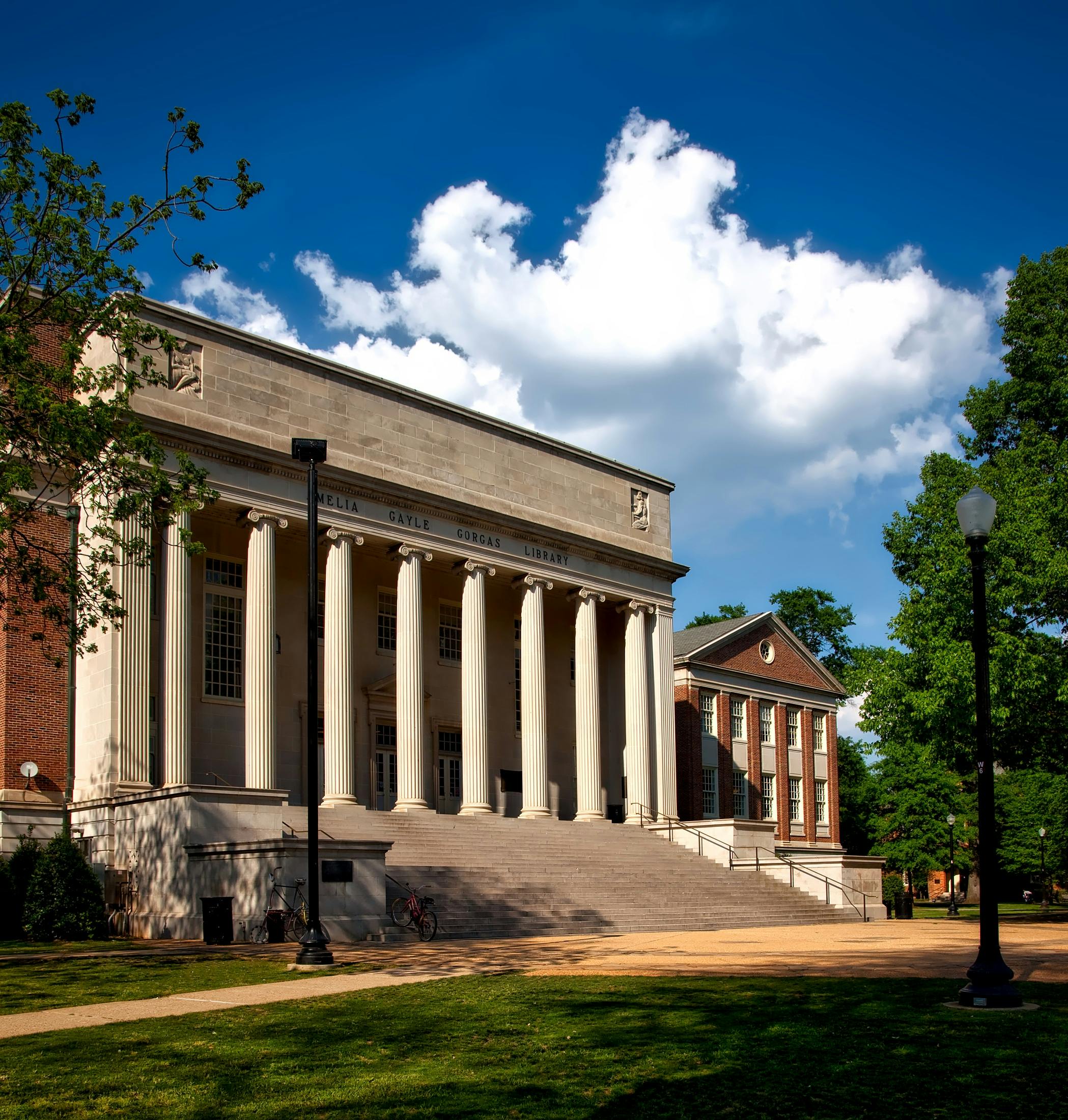
Institutional Architecture: Concentration versus Diversity
The higher education landscape in Country #77 is dominated by a binary structure: a small cluster of research-intensive universities and a large mass of teaching-focused colleges. Three flagship institutions absorb nearly 40% of all public research funding. This concentration has yielded results at the top. The leading university has climbed into the 401-450 band in the Times Higher Education World University Rankings 2026, driven by a 15% year-on-year increase in citation impact. However, the median institutional performance tells a different story. The average student-to-faculty ratio across the system remains a stubborn 22:1, hindering the personalised pedagogy required for complex skill formation.
The non-university sector, primarily composed of polytechnics and professional institutes, struggles with parity of esteem. Despite producing 60% of the nation’s STEM graduates, these institutions receive only 25% of the total tertiary budget. This misalignment between labour market needs and funding allocation creates persistent skills bottlenecks in advanced manufacturing and digital services. A more pluralistic funding model that rewards graduate outcomes, not just research output, is essential to unlock system-wide productivity.
The Employability Imperative: Bridging the Skills Gap
Graduate labour market outcomes are the ultimate stress test for any education system. In Country #77, the overall graduate employment rate within six months of graduation stands at 78%, according to the Ministry of Labour’s 2025 Graduate Tracer Study. This aggregate figure masks severe disciplinary mismatches. Engineering and health sciences graduates enjoy near-full employment, with starting salaries 40% above the national average. Conversely, humanities and social sciences graduates face an underemployment rate of 28%, often taking roles that do not require a degree.
This disconnect signals a failure in labour market signalling and curriculum design. Employer surveys consistently cite a deficit in transversal skills—complex problem-solving, digital literacy, and teamwork. The system’s reliance on traditional lecture-based pedagogy, rather than work-integrated learning (WIL), is a primary culprit. Only 30% of programmes currently mandate an internship or industry project. Scaling WIL from a niche offering to a systemic requirement is arguably the single most impactful policy lever available to improve the return on educational investment for students and the state.
Research and Innovation: The Productivity Paradox
Country #77 invests 1.1% of GDP in research and development, a figure that has remained static for a decade. This trails the OECD average of 1.5% and is a fraction of the 3%+ levels seen in innovation leaders. The research output, measured by Scopus-indexed publications, has grown by 12% in volume over the past three years. However, the field-weighted citation impact (FWCI) remains at 0.85, indicating that the work is cited 15% less than the global average. The system produces quantity but struggles for quality and influence.
A deeper structural issue is the near-total separation of public research institutions from the private sector. Business enterprise expenditure on R&D is exceptionally low, accounting for just 30% of the total. There is a glaring absence of robust university-industry knowledge transfer mechanisms. Patent applications originating from universities have actually declined by 5% since 2023. Without a radical overhaul of intellectual property frameworks and incentives for academic entrepreneurship, the system will remain a consumer of global knowledge rather than a producer of it.
Fiscal Anatomy: Funding Models and Student Debt
The fiscal foundation of Country #77’s tertiary education is built on a hybrid model of public block grants and tuition fees. Public expenditure per student has declined by 6% in real terms since 2020, as inflationary pressures eroded the value of static government allocations. Institutions have responded by increasing tuition fees by an average of 4% annually, shifting the cost burden onto students. The average student debt upon graduation has now reached USD 18,000, a sum equivalent to 85% of the average starting graduate salary.
This debt burden has clear social equity implications. Students from lower-income households are disproportionately reliant on commercial loans with higher interest rates, as the government-backed income-contingent loan scheme covers only 40% of the eligible cohort. The current trajectory is fiscally unsustainable and socially regressive. A recalibration toward a properly indexed, universal income-share agreement model, where repayments are strictly tied to a threshold of graduate earnings, would enhance both equity and institutional revenue predictability.
Internationalisation: A Stalled Engine
International student mobility is a critical source of talent, revenue, and soft power. Country #77 hosted 105,000 international students in 2025, a number that has barely budged from the 2022 figure. The primary source markets are neighbouring countries within the region, accounting for 70% of the inflow. This geographic concentration creates significant geopolitical risk exposure. A downturn in any single source country’s economy or a shift in its domestic higher education capacity would crater enrolment numbers overnight.
The policy environment is not helping. Visa processing times have lengthened to an average of 12 weeks, compared to 4 weeks in competitive destinations. Post-study work rights are limited to a single year, with no clear path to permanent residency. This offering is simply not competitive. Modernising the visa regime and offering a guaranteed three-year post-study work visa for graduates in critical skill areas would immediately reposition Country #77 on the global student mobility map.

FAQ
Q1: What is the single biggest structural weakness in Country #77’s higher education system for 2026?
The most significant weakness is the employability gap for non-STEM graduates. While overall employment is 78%, humanities graduates face a 28% underemployment rate, combined with an average student debt of USD 18,000. This represents a poor return on investment and is driven by a systemic lack of work-integrated learning, which only 30% of programmes mandate.
Q2: How does research quality in Country #77 compare globally?
Research quality, measured by field-weighted citation impact (FWCI), stands at 0.85, meaning it is 15% below the global average. This is despite a 12% increase in output volume. The core problem is a disconnect from industry, with business R&D expenditure exceptionally low and university patent applications declining by 5% since 2023.
Q3: What policy change would most rapidly improve international student recruitment?
The single most impactful change would be a modernisation of the post-study work visa framework. Current processing times average a non-competitive 12 weeks, and work rights are limited to one year. A guaranteed three-year work visa for graduates in critical skill areas would immediately alter the value proposition for prospective international students.
参考资料
- UNESCO Institute for Statistics 2025 Global Education Digest
- OECD 2025 Education at a Glance
- Times Higher Education World University Rankings 2026
- Ministry of Labour, Country #77 2025 Graduate Tracer Study
- QS Quacquarelli Symonds 2026 World University Rankings